
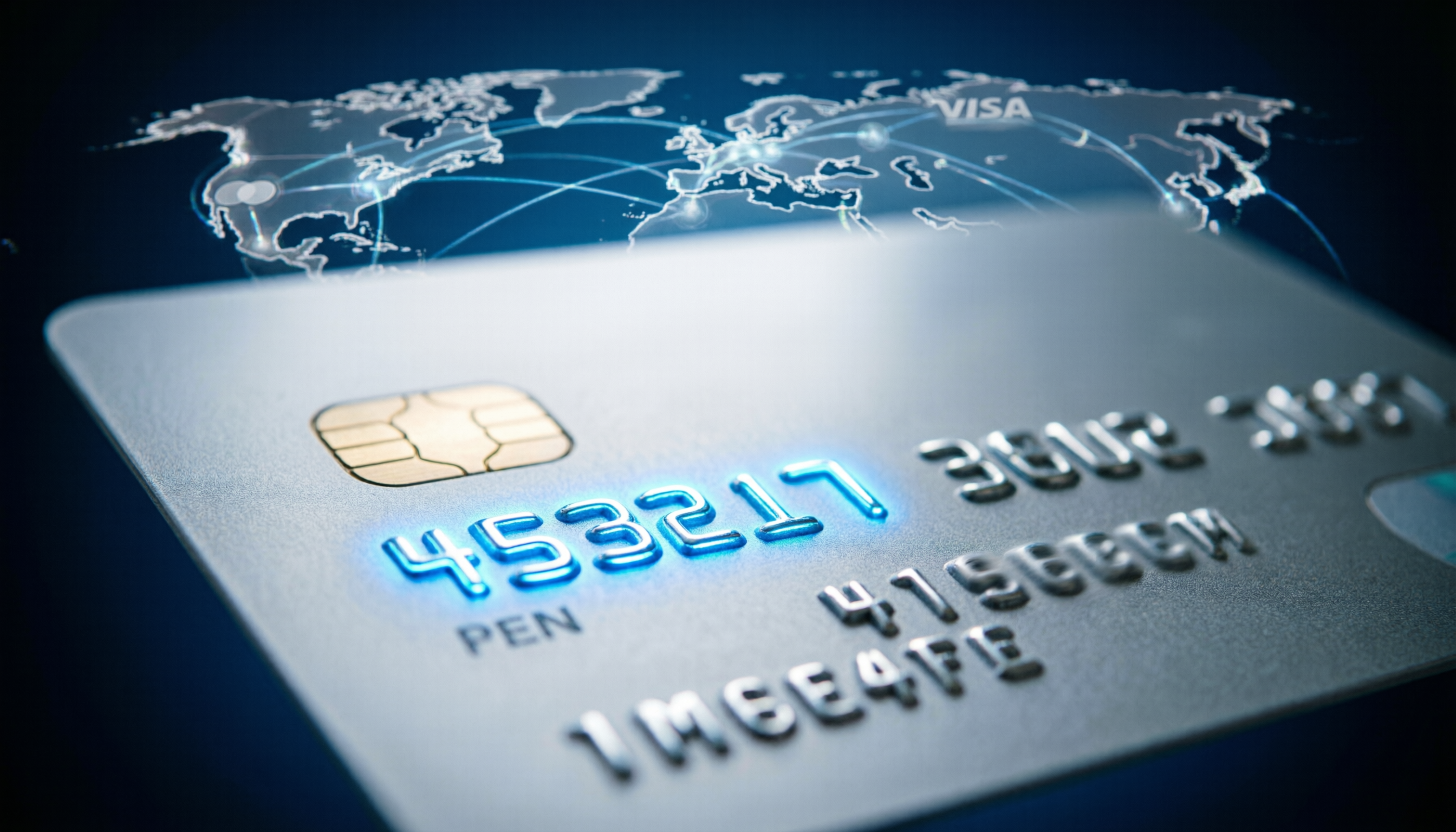
Six Digits That Run the World: Everything You Need to Know About Credit Card BIN Numbers
Every single day, billions of people around the world pull plastic cards out of their wallets. We're used to seeing them as just "a convenient way to pay for coffee or a jacket." But let's face it: the reader at the supermarket or the form on an e-commerce site recognizes your card in a fraction of a second. How? They don't see your name. They don't read your CVV. All they need is just the first six digits.
Those six (and sometimes now eight) digits are called the BIN — Bank Identification Number (also known in the industry as the IIN, or Issuer Identification Number).
The BIN is your card's digital passport. And today, we're going to explain why knowing about it is useful not just for bankers, but for ordinary people who want to understand how their own money works.
Why the BIN isn't just digits, but an "ambulance" for payments
Imagine a huge railway sorting station. Thousands of trains arrive every hour. Each has its own route, cargo, and destination. Without a fast sorting system, everything would grind to a halt.
Something very similar happens in the world of finance when you swipe your card at a terminal.
The moment you insert your card or enter its number online, the payment gateway instantly grabs the first 6–8 digits. The BIN commands:
- "Stop! This card is Visa, not Mastercard"
- "Route the request to Bank of New York — this card was issued there"
- "Attention: this is a Platinum credit card — the transaction fee will be higher than usual"
Without the BIN, the payment system would have to manually sift through millions of banks. With the BIN, everything happens faster than you can blink.
Key takeaway: The BIN isn't for you — it's for the financial infrastructure. It works like customs at a border, quickly deciding where the payment "came from" and where to send it next.
The anatomy of a card number: how the BIN fits into the big picture
Many people think the long number on a card is just a "random number". In reality, it has a strict structure. Let's take a classic 16-digit card as an example:
ABCDEF GHIJKLMN O
Where:
- ABCDEF — that's our BIN (first 6 digits, sometimes 8).
- GHIJKLMN — the customer's account number within the bank.
- O — the final, check digit. It's calculated using a special algorithm called Luhn's algorithm so that a computer can verify: "Was the number entered correctly? Did you make a typo?"
Important nuance: Once upon a time, the BIN was strictly six digits. But in recent years, so many new banks, neobanks, fintech companies, and virtual cards have appeared that the old combinations are running out. That's why Visa and Mastercard now allow 8-digit BINs. It's like moving from a six-digit city code to an eight-digit one — more subscribers, more possibilities.
What do the first digits quietly tell you? Learning to read a BIN like a pro
In finance journals, there's a concept called the MII (Major Industry Identifier) — the very first digit of the card number. It's like the first letter of a word that sets the meaning.
Here's a quick guide to the MII that every well-informed person should know:
First DigitWhat It Means1 or 2 | Airlines and ticketing systems (rare for everyday wallets)
3 | American Express, JCB, Diners Club
4 | Visa — the world's most popular payment system. Roughly every other card in the world starts with 4.
5 | Mastercard — Visa's main competitor
6 | Discover (USA) and China's giant UnionPay
9 | National payment systems (for example, Russia's "Mir")
Now, an important point. The first digit tells you the payment system, and the next 2–5 digits specify the exact bank. For example, all cards from one major Russian bank start with the exact same 6-digit combination.
Real-life example: If you lose your card and only remember the first six digits, your bank can reconstruct the rest. Because the BIN points unambiguously to them.
Why does an ordinary person need to know about BIN? Three non-obvious situations
Many readers will ask: "Okay, that's the theory. But where does this actually matter in real life?"
Situation one: automatic verification in an online store
You enter your card number on a website, and suddenly the field automatically shows the Visa logo and changes the border color. That's not magic. The online checkout read your BIN, recognized what kind of card it was, and loaded the right design. Without the BIN, you'd have to manually select your payment system from a dropdown menu.
Situation two: purchases abroad
Imagine you're in France trying to pay with a Russian "Mir" card. The terminal reads the first digits — 9. If the terminal doesn't support national systems, it will immediately show an error. You won't waste time trying again and again.
Situation three: a suspicious transaction
Your bank calls and asks: "Did you just try to buy a smartphone in Brazil?" And you're surprised: "No, I'm on my couch in Moscow." Your bank might have suspected fraud precisely because the card's BIN (country of issue — Russia) didn't match the purchase's geolocation. These kinds of checks save millions of dollars every year.
The future of BIN: will cards get even smarter?
The financial world never stands still. Right now, the industry is discussing two major trends.
First, a full transition to 8-digit BINs. The major payment systems have already announced that by the end of the decade, 6-digit numbers will be a thing of the past. New banks and fintech companies will receive eight-digit codes. Older players can either keep their old BIN or request a new one.
Second, BINs may start carrying more information. Today, a BIN cannot tell you, for example, what tariff a card is on or whether it offers cashback. But technically, there's nothing stopping us from adding extra "layers" of data to these digits in the future. The main limitation is international standards, which change very slowly.
Our forecast: The BIN is here to stay for a long time. Too many processes depend on this simple, brilliant system. Even when cards become completely virtual and move into smartphones, their "digital passport" of the first 6–8 digits isn't going anywhere.
Summary: what to take away from this article
- The BIN (Bank Identification Number) is the first 6–8 digits of your card number. It instantly tells the payment system who issued the card, what type it is, and what level it has.
- Without the BIN, fast payment processing would be impossible. It is a foundational element of the financial infrastructure.
- The first digit tells you the payment system: 4 — Visa, 5 — Mastercard, 9 — Mir, and others.
- The BIN protects your money. Banks use it to automatically flag suspicious transactions (for example, if the card's country doesn't match the purchase's location).
- The world is moving to 8-digit BINs — simply because the old combinations are no longer enough for everyone.
A final thought: The next time you look at your card, you won't just see a string of digits. You'll see a well-oiled machine that connects your wallet, a store on the other side of the city, and the vast world of finance in a fraction of a second. And that machine is started by six tiny digits — your personal BIN.